
King County Arrest Warrants Explained
Texas law treats an arrest warrant as a written order. Under Texas Code of Criminal Procedure Chapter 15, a magistrate signs it after finding probable cause, and an officer must then arrest the person named. A bench warrant is different, since it grows out of a missed court duty or an unpaid fine rather than a fresh complaint. That distinction matters when you call around. King County publishes no public warrant list, so a warrant search here means phone work. The issuing court can confirm the case and where it stands, and the Sheriff's Office can field questions about service, though it posts no warrant unit page or online status form. Chapter 15 sets the issuance and execution rules that every Texas county, King County included, follows.
The 50th District Court's King County Arrest-Warrant Role
The 50th District Court sits in Seymour and serves Baylor, Cottle, King, and Knox Counties. Before anything else, check the case paper to confirm that this court actually issued your warrant. Government Code §24.152 also gives the 50th Court county-court civil and criminal jurisdiction in King County, though that broad authority does not tell you which court holds an individual warrant. For a district-level question, the 50th District Judge contact reaches the bench, and the King County District Clerk can route file requests through its Guthrie contact.
Inside a King County Arrest Warrant
King County posts no sample arrest-warrant entry online. The details that usually fill one, such as the name, charge, and issuing court, are questions for the clerk rather than fields in a local lookup. Ask the office which parts of the record it can release for your case.
| Warrant number | Ask for the court’s identifier; no King format was located. |
|---|---|
| Cause number | Use the court case number to request the related file. |
| Issuing magistrate | Confirm which court or magistrate authorized the process. |
| Offense and basis | Ask what charge and complaint or affidavit reference appears in the file. |
| Bond and status | Request current terms and whether the warrant was served, recalled, or remains open. |
No public King County example found A sample field list is not a real case result. Treat it only as a list of questions for the clerk.
The King County Magistrate and JP Layer
Arrest process can start with a magistrate in King County. The Justice of the Peace handles Class C and fine-only matters, while the 50th District Court takes district-level cases. No office publishes which officer serves each warrant type. For a lower-court file, call the JP; for a district case, call the District Clerk. The Sheriff's Office is 806-596-4413, though its page lists no separate warrant desk and it cannot change a court order. The Justice of the Peace page and the Sheriff page give the local contacts.
Serving Arrest Warrants in King County
A peace officer executes the court's warrant in King County. The Sheriff's page lists no warrant unit or service assignments, so ask directly which agency handles your case. Article 15.26 requires the officer to make the arrest authority known and to show the warrant on request when it is in hand. A lawfully issued warrant can still be executed without the paper copy. King County also publishes no local booking timetable or bond schedule.
Complaint, Affidavit, and Probable Cause for a King County Warrant
A complaint or affidavit lays out sworn facts for a magistrate to weigh. Article 15.01 defines the written arrest order, and Articles 15.02 and 15.03 cover the requisites and when a warrant or summons may issue. The two papers work differently: a summons directs a person to court, while a warrant authorizes arrest once the legal requirements are met. Ask the District Clerk or the issuing court what papers sit in the file and whether any are sealed, because a missing online entry does not tell you whether a sealed or restricted document exists. King County publishes no public sample of these filings and no local code format. The Chapter 15 text is the official source for these statewide terms.
The statute sets the general requirements. The issuing court confirms what is actually in a King County case file.
Comparing Arrest, Summons, and Bench Warrants
Arrest, summons, and bench warrant name different court actions. Read the notice, then ask which one applies before planning a move in King County.
| Process | Why It May Issue | King County Route |
|---|---|---|
| Arrest warrant | Magistrate authorizes arrest on probable cause or another legal basis | Issuing court, then sheriff for service questions |
| Summons | Orders a person to appear; ignoring it may lead to a warrant | Court named on the summons |
| Bench warrant | Responds to a missed setting or other court obligation | King County JP or the court that set the case |
An unpaid fine can produce a capias pro fine rather than a new charge. The King County bench-warrant page covers that lower-court route.
What an Officer Must Tell You in a King County Arrest
Article 15.26 sets what an officer must say in a King County arrest. The officer must make the arrest authority known and show the warrant on request if it is in hand. Execution without the paper copy is allowed when the warrant was lawfully issued. The county publishes no separate execution guide. The Sheriff's official contact takes law-enforcement questions, while the issuing court confirms case status.
King County Arrest Warrant Booking May Involve Garza County
A September 2025 Commissioners Court agenda records an agreement for Garza County to house King County inmates at its Law Enforcement Center and Jail. The agenda does not say every arrest ends up there, and it sets no bond, transfer, or release instructions. Ask the Sheriff or the issuing court where custody would occur in your case. The Garza County Sheriff page lists that county's contact information, but it is not a King County office.
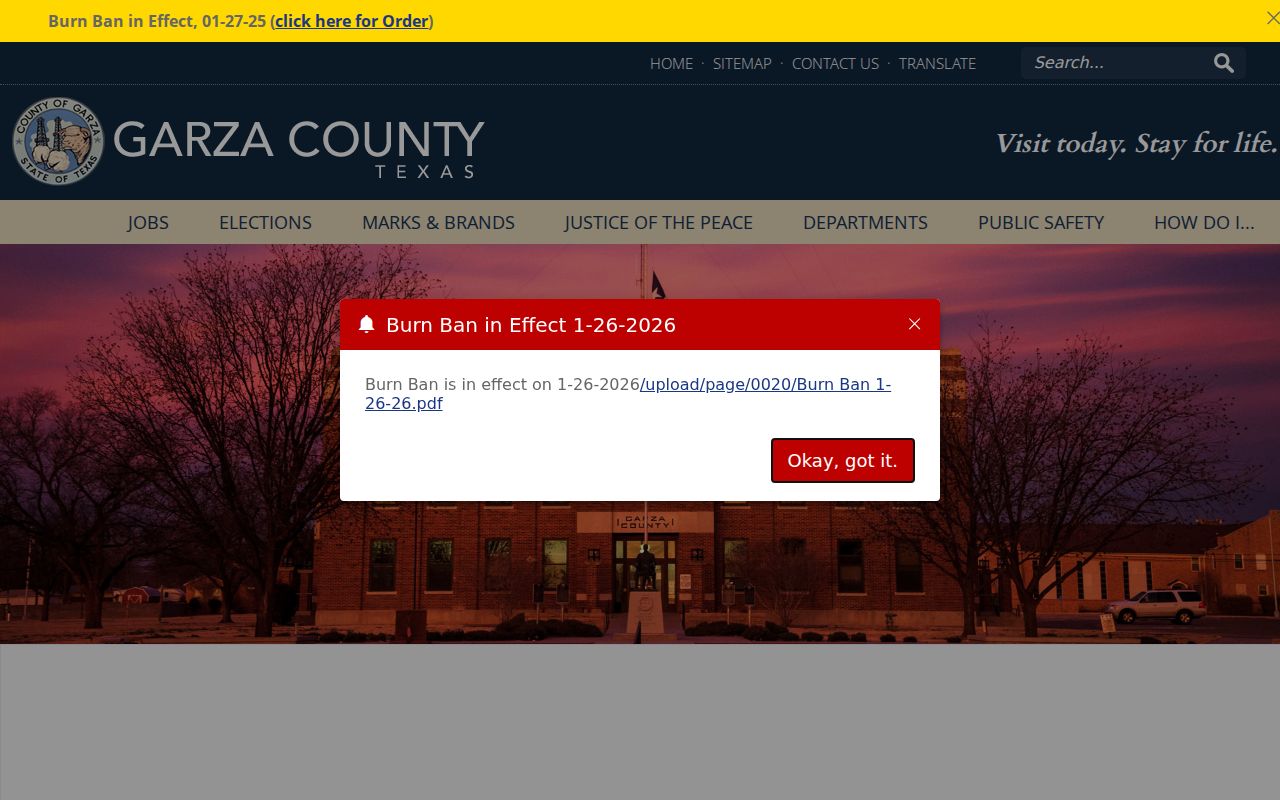
The agenda shows only a possible receiving county for King County bookings. Confirm the actual location before you drive.
Juvenile Arrest Warrants Have Restricted Access
Texas Family Code §58.010 keeps a child’s arrest warrant confidential, along with the complaint or affidavit behind it. Only authorized recipients may see those papers. A public roster is never the right route. King County publishes no juvenile warrant listing, and a parent should ask the juvenile court or a lawyer about lawful access instead. The current Texas Family Code Chapter 58 spells out who may receive these records and how.
Confidentiality limits apply even when other adult court records are public.
King County Arrest Warrant Options Before Execution
A lawyer can reach out to the issuing court before the warrant is served and ask about a voluntary appearance, a bond, or a motion. King County offers no walk-in surrender program and sets no automatic bond amount. For a case filed with a Justice of the Peace, it is worth asking whether the good-faith appearance rule in Article 45A.104(g) fits the facts. District court cases simply follow whatever process that issuing court uses. File questions can be routed through the District Clerk or the County Clerk. Neither clerk nor sheriff can promise what a judge will decide.
King County Arrest Warrant Access Under the Texas PIA
An existing Sheriff's Office record may fall under the Texas Public Information Act, though exceptions apply. Court files go through that court's own clerk, and sealing orders or juvenile confidentiality can still block access. The Attorney General advises covered bodies to respond promptly and to take any required action within ten business days when a ruling is needed, a deadline that does not guarantee release. Its response guide spells out the process. King County publishes no warrant request form or copy fee.
If There's an Arrest Warrant for You
Before driving to any office, nail down the issuing court and the case type. If the charge is serious, a Texas attorney can help arrange a voluntary appearance, a bond, or a request to the court. King County posts no walk-through procedure, warrant-recall form, bond amount, or booking timetable for this step.
Plan with care: A phone inquiry does not recall a warrant. Confirm the court’s process and seek legal advice before arranging an appearance.
Ask the court whether counsel can set a hearing date or work out bond terms. Then ask the Sheriff's Office where an arrested person would actually be taken. The courthouse, the sheriff's office, and the receiving jail may not sit under one roof. Keep whatever the court gives you, along with any receipt and the next court date. Follow up to confirm the clerk has updated the case status.