
Searching for a Warrant in King County
Texas offers no statewide portal that confirms every county warrant. King County posts no sheriff warrant list of its own. For a King County record, the issuing court's file is the strongest lookup, so if the court name is unclear, start with the citation, the notice, or the clerk who handled the case. A name-only vendor result is not official status. Match the spelling on the court paper. A citation number helps staff find the file. The county has published no required search-field list, and no online case index can be assumed to include warrant status.
- For a traffic or Class C citation, call the King County JP and ask for the court status.
- For a district case, contact the District Clerk and name the 50th District Court if it appears on the paper.
- For service questions, call the King County Sheriff’s Office; its page has no online warrant form.
- Use iDocket only for general case context, not as proof that a warrant is active or cleared.
- For an FTA or license-renewal hold, use the Texas FTA tool and then contact the reporting court.
For the status gap, see the King County outstanding-warrants page.
King County Warrant Checks Start With the Issuing Court
The Sheriff page in King County is a phone and fax contact page, not a searchable warrant channel. It lists normal business hours. No warrant unit or walk-in desk is named. For service questions, call the Sheriff at 806-596-4413 and ask where the matter belongs. Recalls and case status belong with the issuing court. The official King County Sheriff page gives its contact. Because the JP and District Clerk keep different court records, one call may not settle every part.
Ask the King County Sheriff which agency can confirm service, then contact the named court for the underlying case status.
Warrant Search Fields Explained
No King County site exposes warrant-specific search fields. The public options are thin. Only the Texas FTA/FTP tool has a live form with visible inputs, and it covers citation compliance and license-renewal status, not warrant searches.
| Source | Visible Input | What It Can Show | Warrant Limit |
|---|---|---|---|
| King County Sheriff | No form found | Phone, fax, office hours | No public list or warrant field |
| King County JP | No citation portal found | Office contact | Call the court for its own case |
| Texas FTA/FTP | Driver license number; date of birth | Reported unresolved offense or hold | Not a warrant database |
| iDocket | General case-search fields after login | Case context by name, court, or cause | No warrant-specific field observed |
The Texas OCA directory lists public contact details for Texas courts. When a King County paper names a court, look up its phone there.
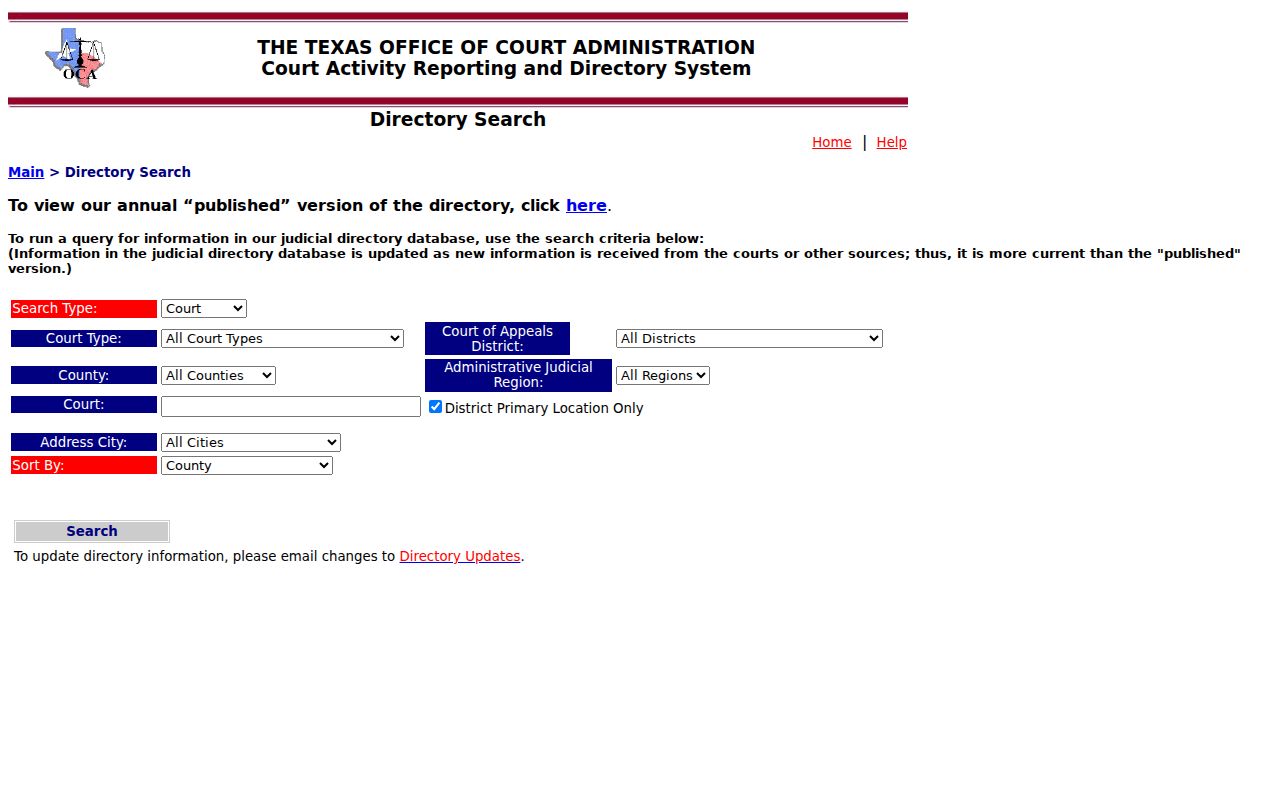
Directory filters identify offices, not warrant status.
Texas FTA Fields Are Not a King County Warrant Search
The state FTA/FTP page asks for a Texas driver-license number and date of birth. A result can point to an unresolved citation reported by a participating court. The DPS says the program contains no warrant information. A hold and an arrest warrant are separate records. For a King County traffic matter, call the JP to ask whether the court reports an FTA or issued a capias pro fine. Do not pay DPS or OmniBase. The reporting court controls its own notice. The Texas FTA/FTP form shows the two required inputs. It is not a general search for warrants from King County or other counties.
What a Warrant Search Shows
No sample King County warrant entry appears in the public interfaces. A clerk can say which details may be released for a specific file. Ask for the case identifier, issuing court, type of process, current status, and next action. Treat these fields as a request checklist only.
| Cause or citation | Ask which number the court uses to find the underlying matter. |
|---|---|
| Warrant type | Confirm arrest warrant, FTA warrant, capias, or capias pro fine. |
| Issuing court | Check whether the JP, 50th District Court, or another court holds it. |
| Bond or balance | No King County bond schedule is public; request current terms from the court. |
| Status and date | Ask if active, served, recalled, quashed, or paid, and when it changed. |
No public sample record located A blank King County result is not confirmation. No one should read an empty lookup as proof that no warrant exists.
King County Warrant Queries on iDocket Are Case Context
The District Clerk links to iDocket, whose county table lists King County District and County case sets. Many searches require login. The vendor tells users to confirm information with the clerk. Its fields are not a King County warrant-status search. Coverage categories and filing ranges are not warrant totals. The iDocket county table identifies its available case sets, while the official District Clerk page remains the county-linked route for district records.
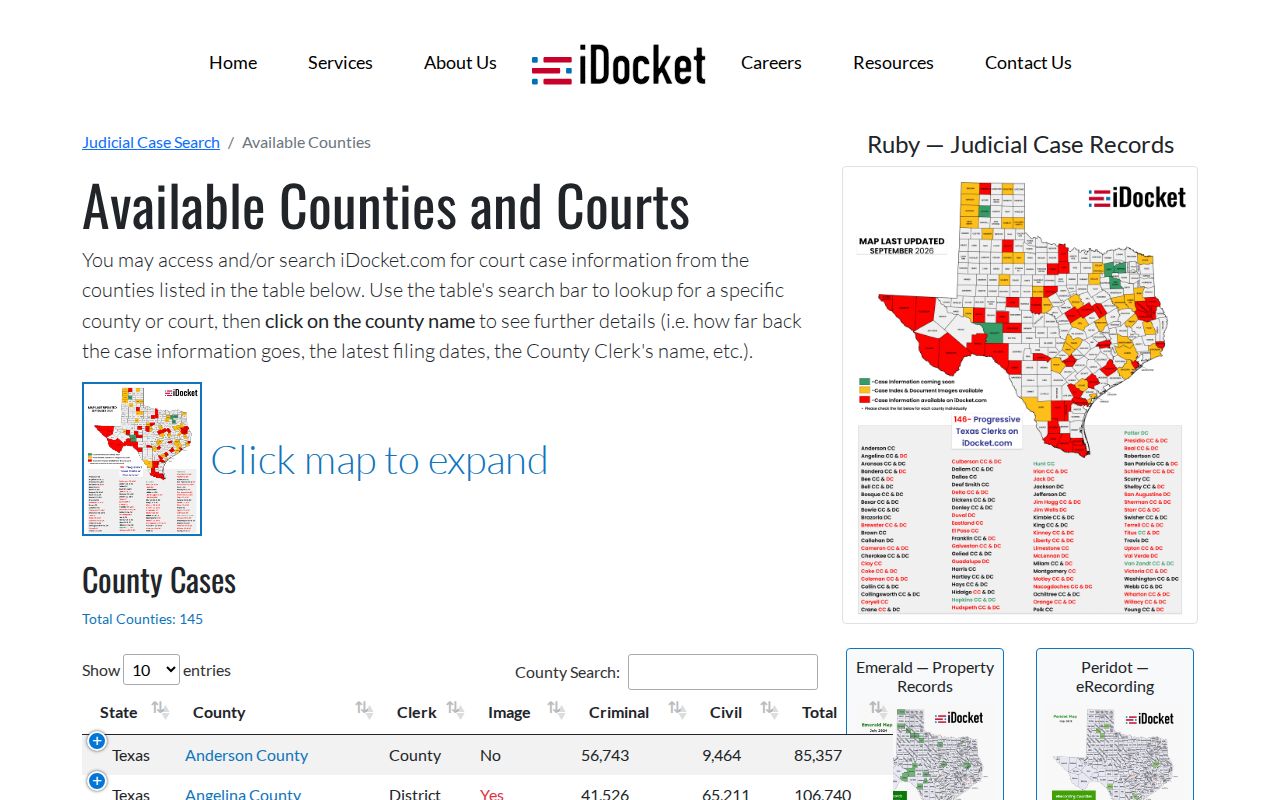
The coverage table shows vendor case sets, not a King County warrant list or a guarantee of current court status. The separate iDocket search landing page shows its general login and search modes.

Verify any vendor result with the court.
Where to Check Warrants in King County
King County has one countywide JP and a four-county district court. The JP handles local traffic, Class C, and fine-only matters. The 50th District Court handles district-level cases and also holds county-court civil and criminal jurisdiction under Government Code §24.152. The County Clerk and District Clerk share a public contact. They keep different case types. The 50th District Judge page gives the public court contact in Seymour, and the county-linked County Clerk page lists its Guthrie office information.
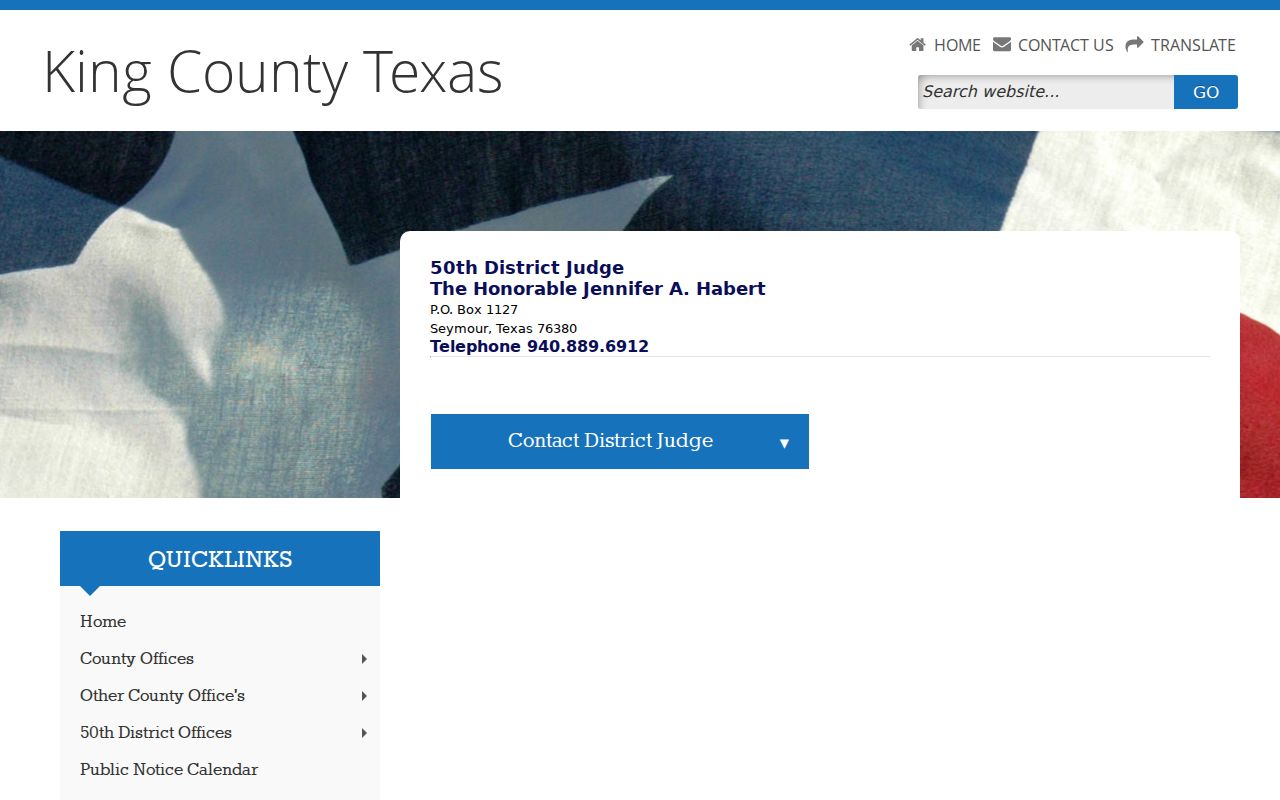
That district-court contact sits outside King County. Confirm the filing court before sending any request; the official King County JP page shows the local lower-court route.
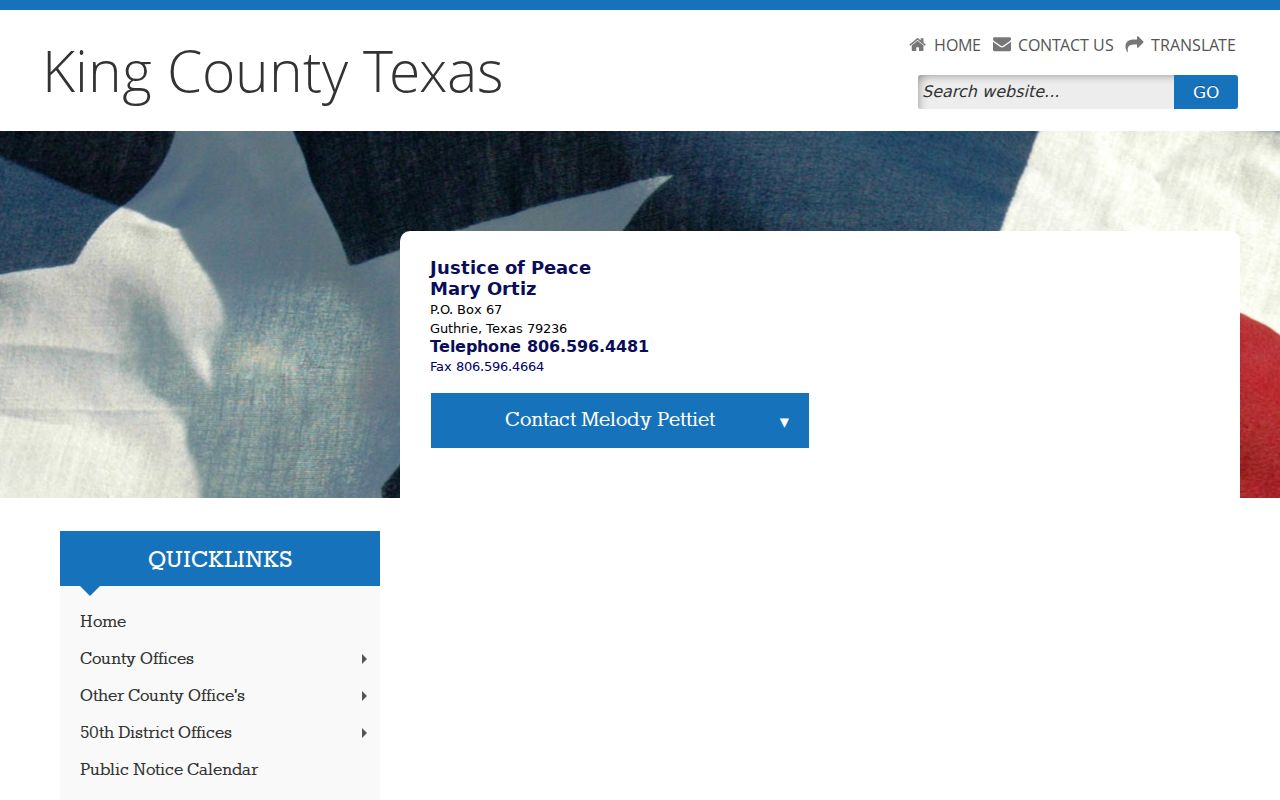
The King County JP page lists the local lower-court route, though it displays no warrant status online.
King County Warrant Requests Under the Texas PIA
Under Texas Government Code Chapter 552, ask the governmental body holding a non-judicial record for existing public information. Describe the record and date range. Request a court file from the court or clerk instead; access rules and exceptions may limit release. The Attorney General's guide recommends written requests. King County publishes no warrant-record fee schedule, so ask about copying charges first.
- Name the issuing office and give the case type, date range, and any known cause or citation number.
- Ask for records that already exist; a public body need not create a new report to answer a question.
- State a preferred delivery method and ask about charges.
- Follow up with the court for judicial records.
See the Texas OAG public-information request guide.
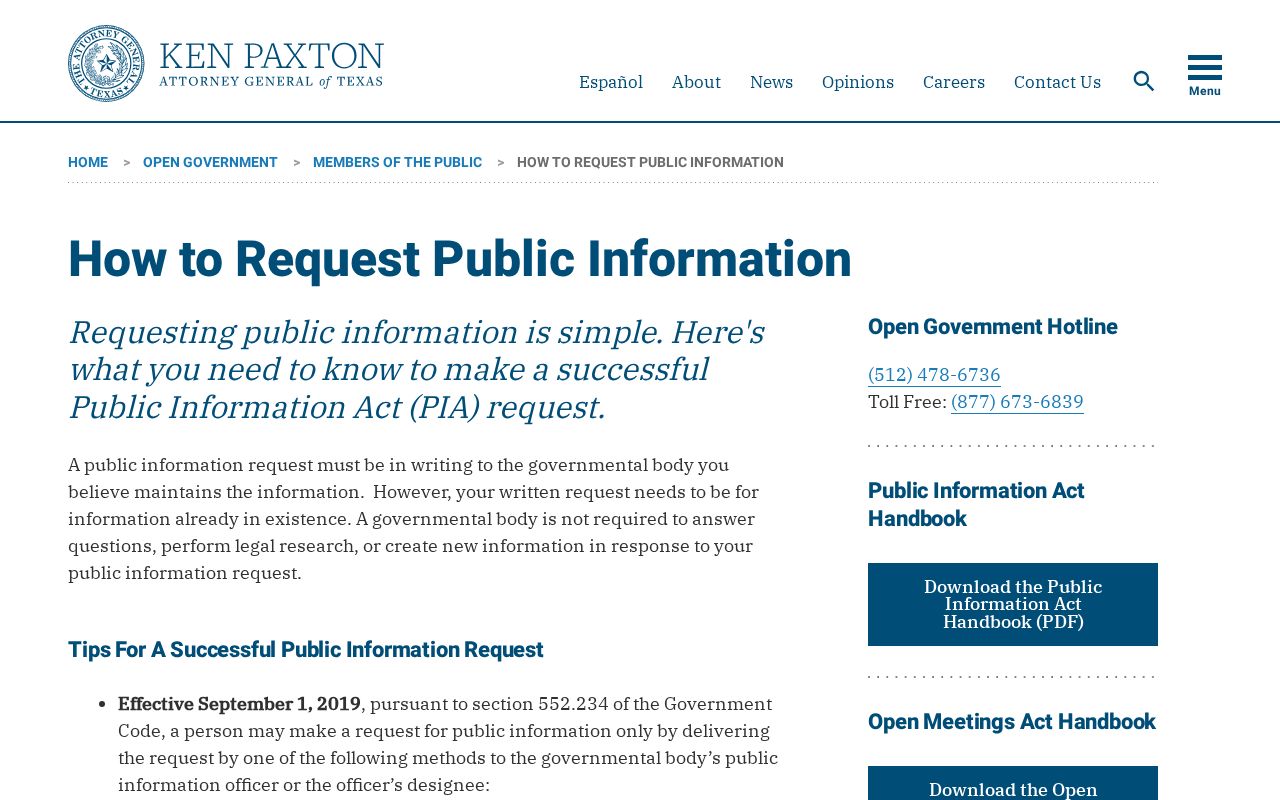
The guide is not a local King County warrant form.
No King County Warrant Search Form Was Located
King County posts no warrant-specific search form on the County Clerk, District Clerk, JP, or Sheriff pages. Call 806-596-4412 for county-court or probate records, 806-596-4481 for a local fine-only case, or 806-596-4413 for the Sheriff's Office. Each office can route a question it cannot answer itself. The County Clerk lists 800 South Baker, while the county footer gives 1667 US-83. Call before you drive to either one. The linked records service opens a login screen rather than a warrant search, so it will not settle a warrant question on its own.
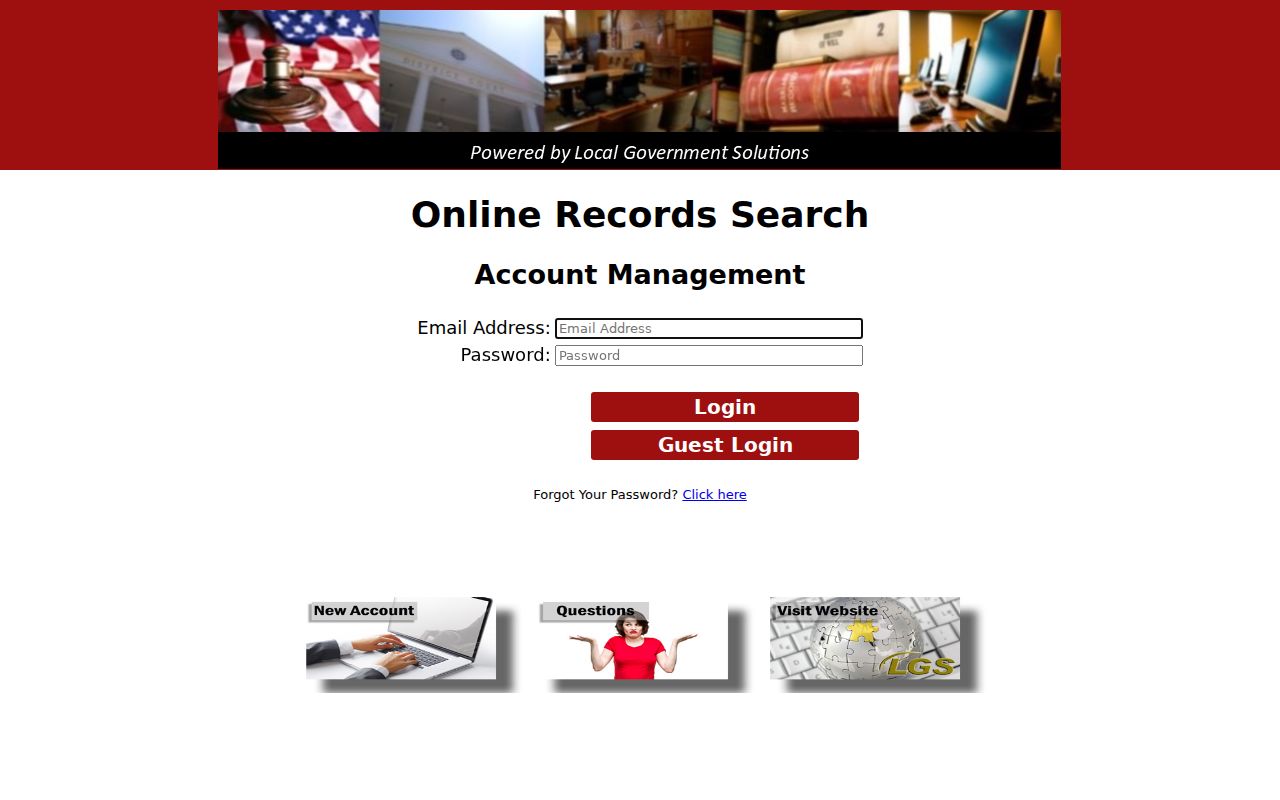
Ask the clerk whether the login service covers the case type.
Restricted Warrants and Access Rules
Not every King County warrant record is public. Access turns on the record type and its legal status. Sealed warrants and investigative files stay out of public indexes, and juvenile arrest warrants with their supporting complaints are confidential under Texas Family Code §58.010, effective December 4, 2025. No request makes a protected file public.
Before relying on a result:
Ask the issuing court whether a file exists and whether an access rule limits release.
Use the King County Sheriff for service questions, not a general case database.
A clear Texas FTA result does not confirm that no warrant exists.
The Texas Family Code Chapter 58 sets the current juvenile-warrant confidentiality rule. For any other King County record, ask the holding office what it may release.